Useful Column
【What's Truly Important in Cleaning】Basic Procedures and Efficiency Tips Taught by Professionals
‘We clean every day, yet somehow the dirt still stands out.’
‘The finish varies depending on which cleaning staff member does the job.’
Such common frustrations faced by many facility managers and executives can likely be resolved by re-examining the ‘essence’ of cleaning.
Amidst intensifying labor shortages and rising costs, the most critical element is establishing a ‘system’ that maintains high-quality conditions and maximizes efficiency, no matter who is on duty.
In this article, we provide a comprehensive breakdown of ‘what’s truly important’ for protecting your facility's value—covering everything from the fundamental principles practiced by professionals to key points for boosting efficiency using the latest robotic technology.
What's Truly Important in Cleaning|3 Basic Principles
In professional settings, cleaning does not rely solely on individual "intuition" or "experience."
To consistently maintain a stable and pleasing appearance, it is essential to perform tasks based on established "methods" and "rational judgment."
① Manualization for Consistent Quality from Anyone
In cleaning, the most undesirable situation is when work quality becomes dependent on "the skill or experience of the assigned staff."
If cleanliness is achieved only by experienced veterans but dirt remains when a newcomer handles it, maintaining a sense of cleanliness throughout the entire facility becomes impossible.
This is where "manualization" becomes crucial.
• Which areas to clean, when, and in what order
• Which detergent to use, and at what dilution ratio
• What is the criteria (goal) for judging something as "clean"
By putting these into words and implementing them as checklists, a consistent quality can be provided by anyone in charge.
Standardizing cleaning procedures is the first step supporting professional quality.
② Proper Tool Selection to Ensure Safety
"Making things clean" is not the only important aspect of cleaning.
Ensuring the "safety" of workers and facility users is equally, if not more, important.
For example, using a detergent unsuitable for the floor material can increase slip hazards or risk damaging the material.
Also, not using appropriate mops or cloths correctly can cause "cross-contamination," spreading dirt around.
In modern cleaning sites, the introduction of scrubbers (floor cleaning machines) with high suction power that minimize "water residue" is recommended.
Leaving moisture on the floor directly leads to the serious occupational hazard risk of slip-and-fall accidents for pedestrians, so tool selection should be done carefully from a safety management perspective as well.
③ Optimizing Procedures for the Fastest and Most Beautiful Finish
Efficient cleaning requires "logical procedures" that eliminate wasted movement.
Professionals thoroughly adhere to basic procedures such as the following:
"From Top to Bottom":
Clean high surfaces first to let dust fall, then clean the floor.
"Dry Before Wet":
First, remove dust using dry dust mops or a vacuum cleaner, then perform wet wiping. Starting with wet wiping immediately can turn dust into a muddy paste that spreads, creating unnecessary extra work.
Following the correct procedure contributes not only to saving time but also significantly to the beauty of the final result.
"Efficiency" and "Sustainability" That Matter in Cleaning Operations
In modern building maintenance and facility management, major obstacles are "labor shortages" and "rising labor costs."
Therefore, transitioning from a management style reliant solely on "human power" to a "new form of cleaning" that actively incorporates technology has become an urgent necessity.
Automating Tasks to Solve Labor Shortages
Japan's working-age population continues to decline, and securing staff in the cleaning industry, in particular, is an extremely serious challenge.
In such circumstances, what's important is dividing roles in cleaning tasks between "people" and "machines (robots)."
Promoting "automation" by entrusting robots with simple yet labor-intensive tasks like cleaning large corridors or hall floors allows limited staff to focus on detailed cleaning that robots find difficult, or on higher-value-added work.
This makes it possible to maintain a high cleaning standard even with fewer people.
Visualizing Work to Reduce Costs
Both "assuming something is cleaned" neglect and excessive cleaning performed more often than necessary create cost inefficiencies.
What's important in cleaning management is to "visualize" work status with objective data.
For example, utilizing our remote management system "BMS (Building Management System)" allows centralized management on PCs or tablets of when, where, and how much cleaning was done.
Cleaning status is displayed with color coding, and reports are automatically generated, reducing the burden of on-site patrols and enabling efficient staff allocation based on data.
Thorough Preventive Cleaning to Protect Facility Value
The biggest trick to controlling cleaning costs is not "cleaning after it gets dirty," but "creating a system that prevents it from getting dirty."
This is called "preventive cleaning."
For example, installing high-performance mats at entrances to prevent mud intrusion, or automating periodic cleaning to prevent dirt accumulation.
Removing deeply ingrained dirt requires special detergents or expensive specialized contractors, ultimately causing costs to skyrocket.
Consistently maintaining high cleaning quality on a daily basis is, in the medium to long term, the most cost-effective and wise choice for preserving a facility's asset value.
For Maintaining Essential Cleaning Quality, "Robots" Are Optimal
When pursuing basic procedures and efficiency to their limits, the ultimate solution often arrived at is the introduction of "cleaning robots."
Why are so many advanced companies introducing robots now?
Why Robots Are Essential for Stable Quality Maintenance
Human-performed work inevitably involves "variation" due to daily physical condition or motivation levels.
In contrast, robots perform cleaning tasks 24/7, 365 days a year, always at a constant speed and quality, as programmed.
Robots pick up dirt more reliably than manual human work and generate almost no water residue.
This "stability of quality" and "high level of safety" are the biggest reasons robots are chosen for cleaning sites.
Points for "Model Selection" Tailored to Facility Scale and Purpose
Not just any robot will do. What's important is choosing the optimal partner suited to the facility's environment and challenges.
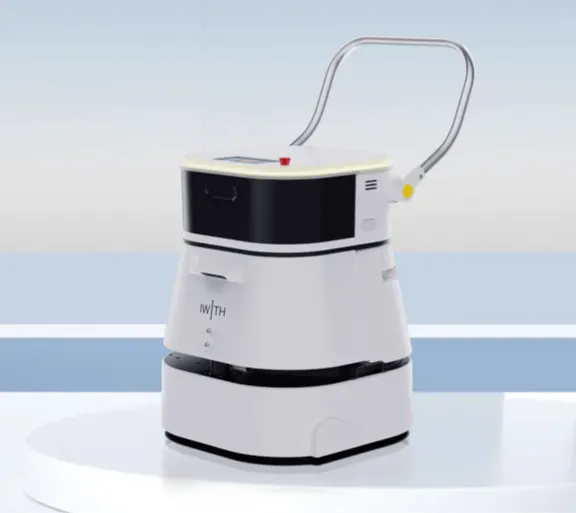
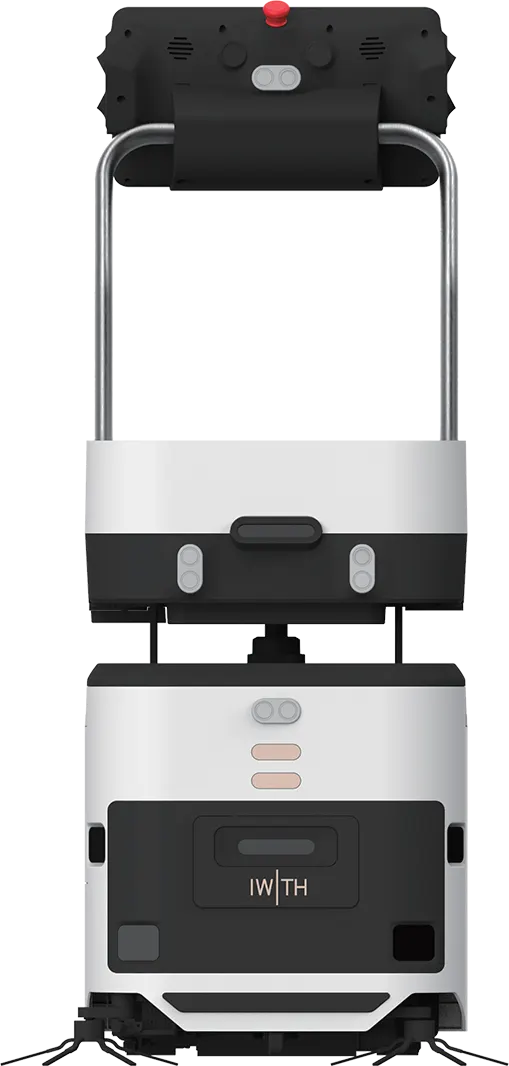
For example, at AIWIZE Robotics, we propose a lineup such as the following, responding to on-site needs:
• For Wide Areas / Commercial Facilities: J35 / J35PRO
For building maintenance, office buildings, and large commercial facilities, models boasting overwhelming cleaning power and efficiency are suitable.
The J35 achieves a maximum cleaning efficiency of 800㎡/h. Through elevator linkage via Octa Robotics' dedicated unit (LCI-BOX), it enables completely unmanned cleaning across multiple floors.
▶ Details on the J35 are here
▶ Details on the J35PRO are here
• For Stores / Small Areas: J30S / J30PRO
For store environments like convenience stores, restaurants, and supermarkets, versatile models with good maneuverability are optimal.
The J30PRO offers powerful suction of 15kPa and also features an AI camera with "product out-of-stock detection."
It also serves as a next-generation store management tool that supports store operation efficiency alongside cleaning.
▶ Details on the J30S are here
▶ Details on the J30PRO are here
Confirming "Operational & Support Systems" to Avoid Failure
To maintain stable cleaning quality continuously with robots, having a "support system" that prevents site shutdowns during failures and a "management system" that allows objective evaluation of cleaning outcomes are what determine success or failure.
As a specialized manufacturer, we at AIWIZE Robotics place as much, if not more, importance on this "post-introduction partnership" as on machine performance.
• Remote Management System "BMS"
Centrally manages the operational status of multiple locations and automatically generates cleaning reports.
This visualizes the "quality of cleaning" and significantly reduces the burden of on-site management.
• Nationwide On-site Maintenance
In case of any malfunction, engineers will directly visit the site through our nationwide maintenance network.
A system that minimizes downtime is essential for professional sites.
By utilizing this set of "robots + management system + support" together, many companies are achieving concrete results.
The building maintenance company " Daidai Zentex Co., Ltd. " has made cleaning tasks routine through robot introduction, dramatically enhancing on-site safety through "human-robot collaboration."
Furthermore, at " FamilyMart ", results such as a 1.5x increase in sales by adding sales promotion functions to robots have been reported, transforming cleaning into a revenue-generating activity.
Summary|What's Important in Cleaning is "Creating Systems"
What's important in cleaning is not merely removing the dirt in front of you.
It's about establishing "manualization," "correct procedures," and "efficient systems," and making them sustainable.
In the coming era of accelerating labor shortages, utilizing technology will become an inevitable and necessary trend to maintain cleaning quality and protect facility asset value.
"Introducing it while the company has management leeway and accumulating know-how" will likely be the greatest risk hedge against future labor shortages.
AIWIZE Robotics strongly supports your cleaning DX with high-quality Japanese-made robots and a nationwide support system.
If you have concerns like "Is our current cleaning setup really sufficient?" or "Which robot is suitable for our company?", please feel free to consult with us professionals.
We will propose the optimal plan to protect and enhance your facility's value together.
▶ For inquiries, click here
[J30 Series / J35 Series] Complete guide to differences & how to choose – feature comparison of all 4 models
For details >
What Is a Commercial Robot Vacuum? Benefits and Usage Tips for Corporate Adoption
For details >
[Commercial Cleaning Robots] 3 reasons Japanese-made models are chosen – compared on quality & support
For details >